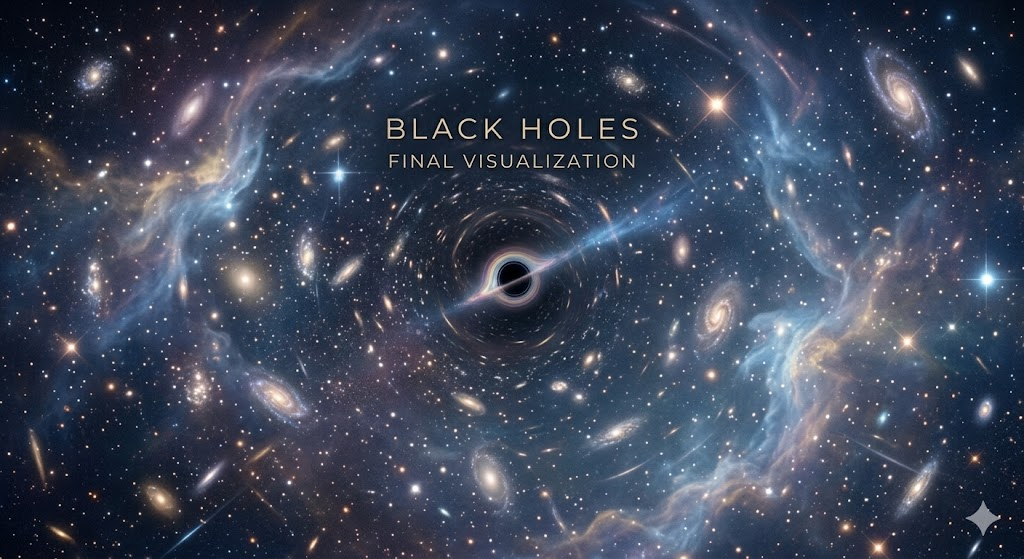
Introduction to Black Holes
A black hole is one of the most powerful and mysterious objects in space. In simple terms, a black hole is a region in space where gravity is so strong that nothing—not even light—can escape from it. This makes it invisible and extremely difficult to study directly. Scientists study it using its effects on nearby stars and gases.
Black holes are an important part of modern astronomy and help us understand how the universe behaves on a large scale.
How Do Black Holes Form?
Black holes usually form when a massive star reaches the end of its life cycle. When a star runs out of fuel, it can no longer support itself against gravity. As a result, it collapses under its own weight.
If the star is large enough, this collapse becomes extremely powerful and forms a black hole. This process is called a supernova explosion, where the outer layers of the star are thrown into space, and the core collapses into a dense point.
At this stage, gravity becomes so strong that even light cannot escape.
Types of Black Holes
Scientists have discovered different types of black holes in the universe:
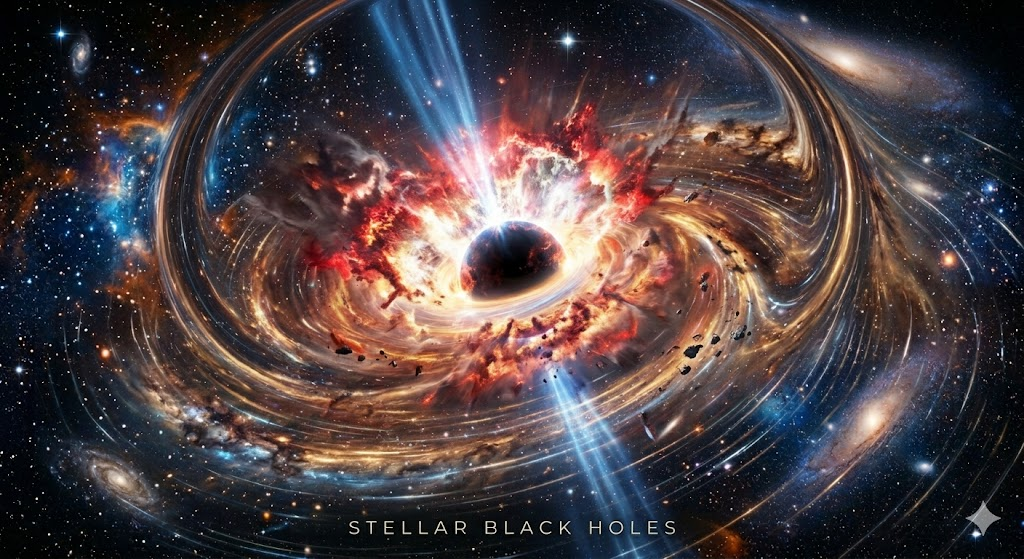
1. Stellar Black Holes
These are formed from collapsing stars. They are relatively small in cosmic terms but still extremely dense.
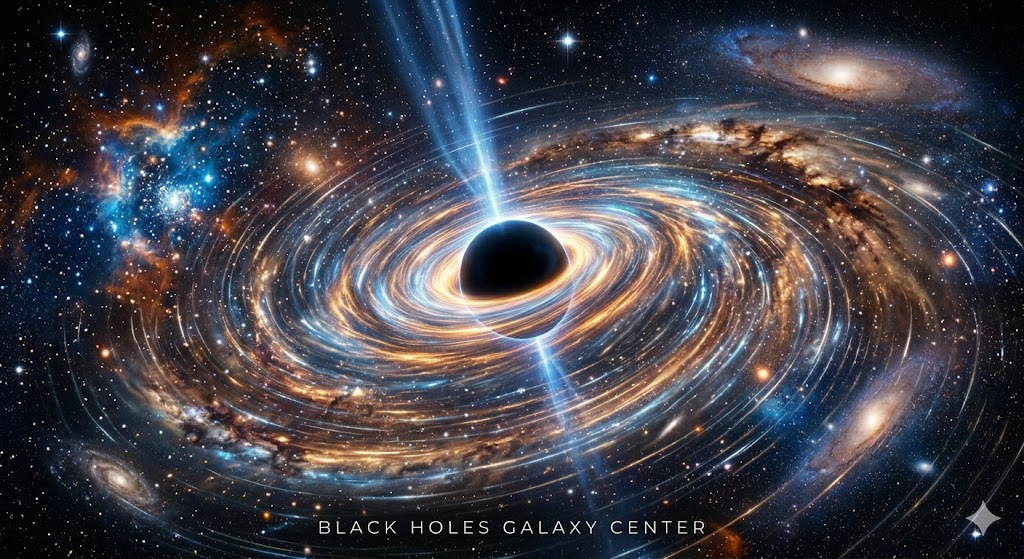
2. Supermassive Black Holes
These are found at the center of most galaxies, including our Milky Way. They can be millions or even billions of times heavier than the Sun.
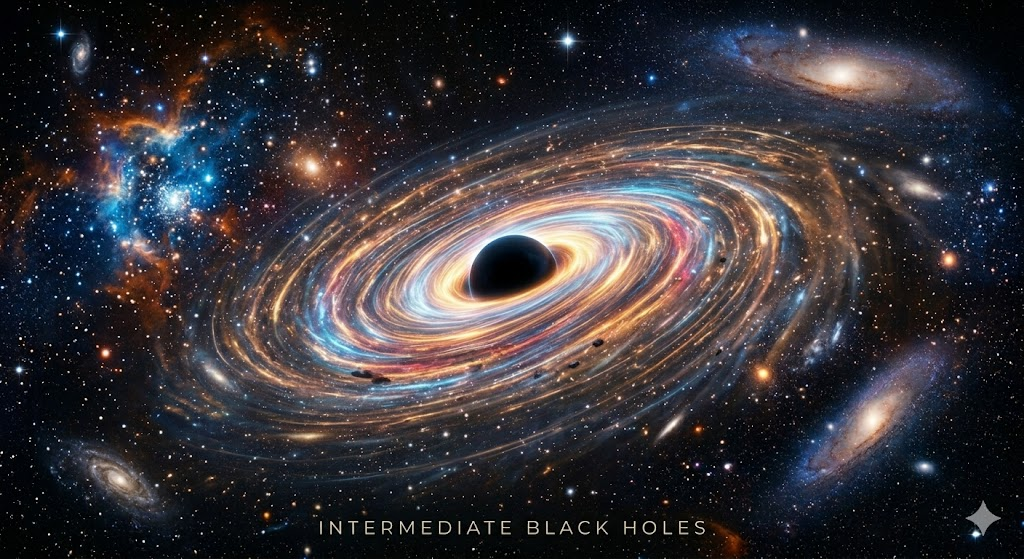
3. Intermediate Black Holes
These are medium-sized black holes and are still being studied by scientists. They are harder to detect.
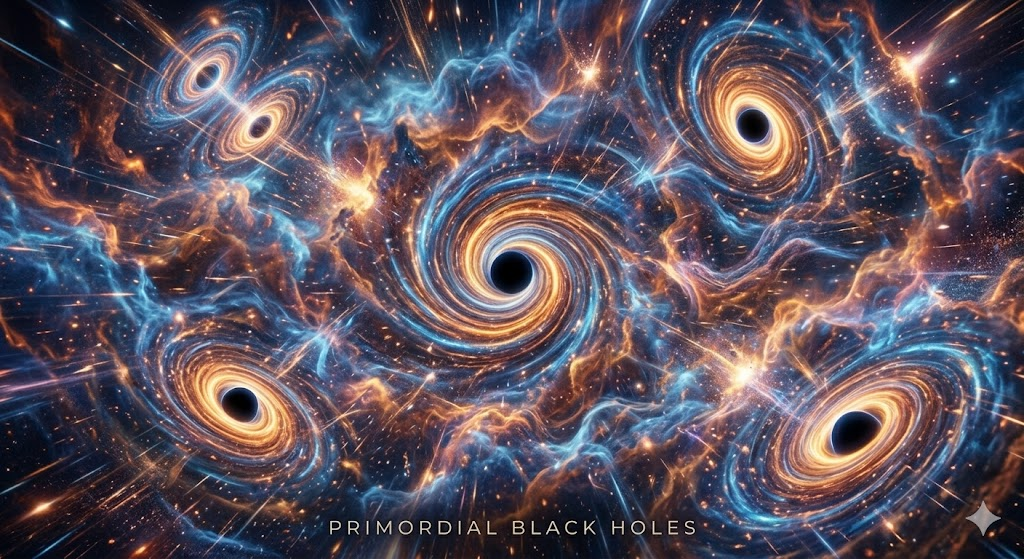
4. Primordial Black Holes (Theoretical)
These are hypothetical black holes that may have formed shortly after the Big Bang.
What Happens Near a Black Hole?
The area around a black hole is extremely dangerous. If anything gets too close, it gets pulled in by strong gravitational force.
The boundary around a black hole is called the event horizon. Once something crosses this point, it cannot escape.
Time also behaves differently near a black hole. Due to extreme gravity, time slows down compared to normal space. This concept is part of Einstein’s theory of relativity.
Black Hole
Black holes are not empty spaces; they contain a huge amount of mass compressed into a very small area. This makes them incredibly dense and powerful.
Interesting Facts About Black Holes
- Black holes are invisible, but their presence is detected using X-rays and star movement.
- The closest known black hole to Earth is still thousands of light-years away.
- Supermassive black holes exist at the center of almost every large galaxy.
- If Earth became a black hole (which is impossible naturally), it would be only a few centimeters wide.
Why Are Black Holes Important in Science?
Black holes help scientists understand:
- Gravity in extreme conditions
- The formation of galaxies
- Space-time behavior
- The evolution of the universe
Studying black holes also helps improve modern physics and theories like general relativity.
Final Thoughts
Black holes are one of the greatest mysteries of the universe. Even though we cannot see them directly, their effects are powerful and measurable. As technology improves, scientists continue to discover more about how they form, behave, and influence galaxies.
Understanding black holes not only expands our knowledge of space but also brings us closer to solving the secrets of the universe.