Introduction
Physics based technology solar panel systems have transformed the way humans generate electricity. As the world shifts toward clean and renewable energy sources, solar panels are becoming one of the most important technologies of the modern era. They use fundamental principles of physics to convert sunlight directly into electrical energy without producing harmful emissions.
This technology not only helps reduce dependence on fossil fuels but also provides a sustainable solution for future energy needs. Understanding how solar panels work requires knowledge of concepts such as light energy, semiconductors, and the photovoltaic effect.
What Is a Solar Panel?
A solar panel is a device that converts sunlight into electricity. It consists of multiple solar cells made from semiconductor materials, usually silicon. These cells capture solar energy and transform it into usable electrical power.
Solar panels are widely used in homes, industries, satellites, street lighting systems, and large-scale solar power plants. Their popularity continues to grow because they offer a clean and environmentally friendly source of energy.
The Physics Behind Solar Panels
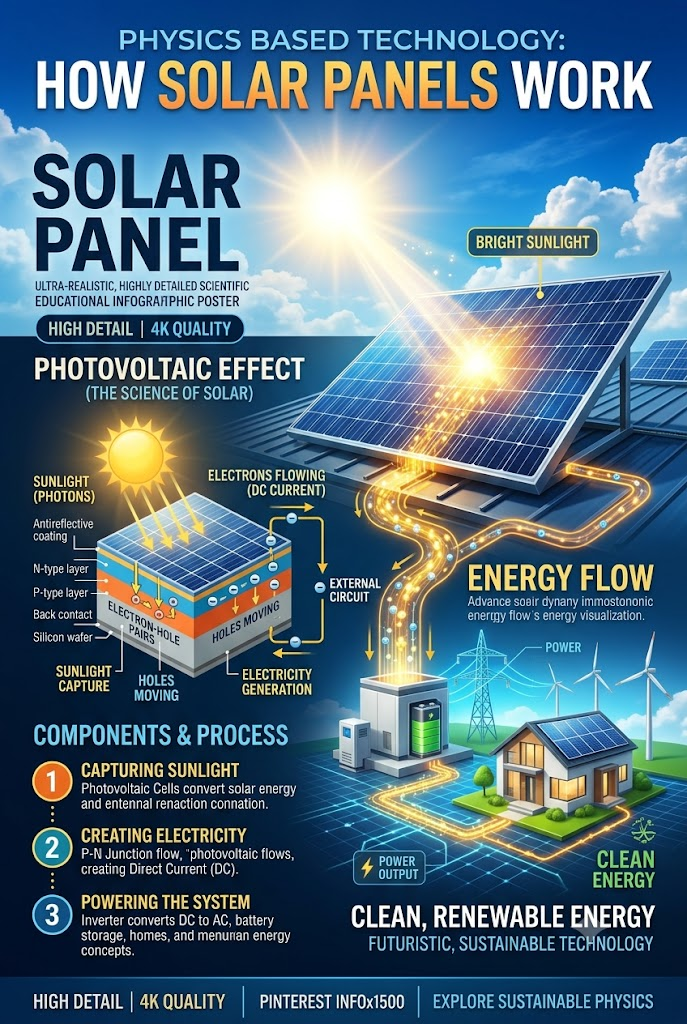
The operation of solar panels is based on a physical phenomenon known as the photovoltaic effect.
When sunlight strikes a solar cell, photons from the sunlight transfer their energy to electrons inside the semiconductor material. This energy excites the electrons and allows them to move freely.
The movement of these electrons creates an electric current. Metal contacts attached to the solar cell collect this current and deliver it as electricity that can power devices and appliances.
This process demonstrates a direct conversion of light energy into electrical energy, making solar panels a remarkable application of modern physics.
Components of a Solar Panel
Several important components work together to generate electricity:
Solar Cells
Solar cells are the primary units responsible for converting sunlight into electricity.
Silicon Semiconductor
Silicon acts as the semiconductor material that enables electron movement when exposed to light.
Protective Glass Layer
A transparent glass layer protects the solar cells from environmental damage while allowing sunlight to pass through.
Metal Conductors
Metal contacts collect and transport the generated electrical current.
Frame and Back Sheet
These provide structural support and protect the internal components from weather conditions.
How Solar Panels Generate Electricity
The electricity generation process follows several steps:
- Sunlight reaches the solar panel surface.
- Photons interact with silicon atoms.
- Electrons absorb energy and become excited.
- An electric field directs electron movement.
- Electric current flows through external circuits.
- The generated electricity powers homes, devices, or storage batteries.
This process occurs continuously whenever sunlight is available.
Advantages of Solar Panel Technology
Solar panel technology offers numerous benefits:
Renewable Energy Source
Sunlight is abundant and naturally replenished.
Environmentally Friendly
Solar panels produce electricity without releasing greenhouse gases.
Reduced Electricity Bills
Users can significantly lower energy costs over time.
Low Maintenance
Most solar systems require minimal maintenance after installation.
Energy Independence
Solar energy reduces reliance on conventional power grids and fossil fuels.
Applications of Solar Panels
Solar panels are used across various sectors:
- Residential rooftop systems
- Commercial buildings
- Solar farms
- Satellites and spacecraft
- Agricultural irrigation systems
- Traffic signals and street lights
- Portable charging devices
Their versatility makes them one of the most widely adopted renewable energy technologies.
Future of Solar Panel Technology
Researchers are continuously improving solar panel efficiency and affordability. Emerging technologies such as perovskite solar cells, bifacial panels, and smart solar tracking systems promise even greater energy production.
Future developments may enable solar panels to become more efficient, lighter, and easier to install. As renewable energy demand increases, solar technology is expected to play a central role in global energy systems.
Final Thoughts
Physics based technology solar panel systems demonstrate how scientific principles can solve real-world challenges. By utilizing the photovoltaic effect, solar panels efficiently convert sunlight into electricity while protecting the environment.
As technology advances, solar energy will continue to become more efficient and accessible, helping societies move toward a cleaner, greener, and more sustainable future.