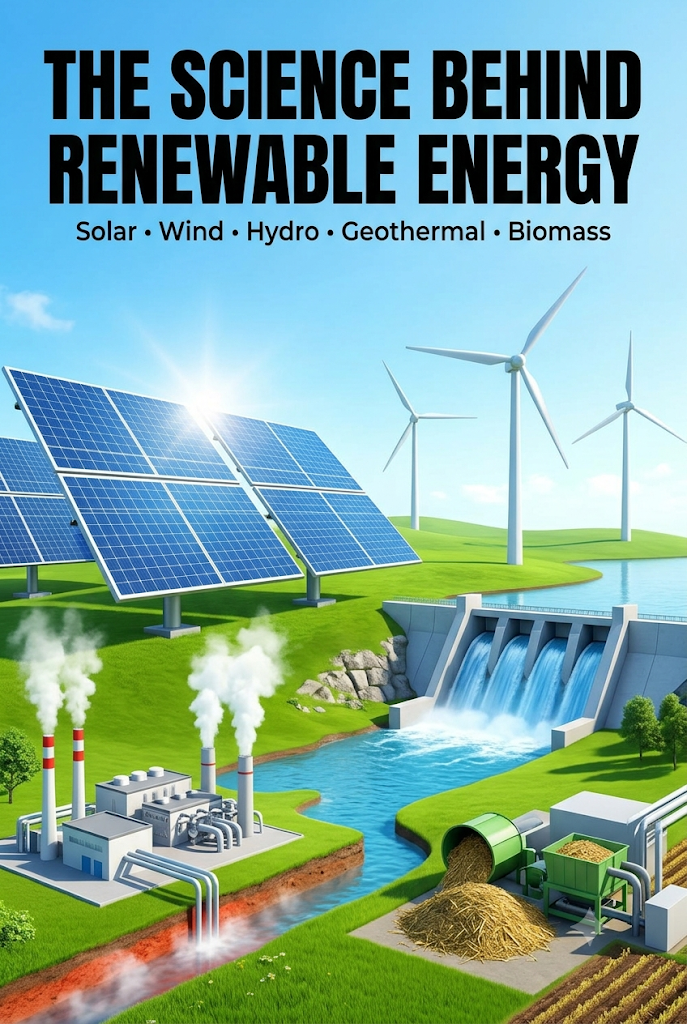
Introduction
Energy is the foundation of modern civilization. Every day, homes, industries, transportation systems, and digital technologies rely on a constant supply of power. For more than a century, fossil fuels such as coal, oil, and natural gas have been the primary sources of global energy. However, these resources are finite and contribute significantly to environmental problems, including air pollution and climate change.
As concerns about sustainability continue to grow, renewable energy has emerged as a cleaner and more reliable alternative. Renewable energy is generated from naturally replenishing resources such as sunlight, wind, water, geothermal heat, and biomass. These sources provide a sustainable way to meet the world’s increasing energy demands while reducing dependence on fossil fuels.
The science behind renewable energy involves converting natural forces and processes into usable electricity and heat through advanced technologies. From solar panels that capture sunlight to wind turbines that transform moving air into power, renewable energy systems demonstrate how scientific innovation can help solve some of humanity’s greatest challenges.
This article explores the science behind renewable energy, examines how major renewable technologies work, discusses their benefits and challenges, and highlights their role in creating a sustainable future.
Understanding the science behind renewable energy is essential for anyone interested in sustainable development and future energy solutions.
The Science Behind Renewable Energy
As the world faces growing energy demands and increasing environmental challenges, renewable energy has emerged as one of the most promising solutions for a sustainable future. Unlike fossil fuels, which are limited and produce significant greenhouse gas emissions, renewable energy sources are naturally replenished and environmentally friendly.
From solar panels on rooftops to massive offshore wind farms, renewable energy technologies are transforming how electricity is generated and consumed worldwide. Understanding the science behind renewable energy helps us appreciate why these technologies are becoming essential for combating climate change and ensuring long-term energy security.
What Is Renewable Energy?
To understand the science behind renewable energy, it is important to first understand what renewable energy actually means. Renewable energy refers to energy derived from natural resources that are continuously replenished. These resources include sunlight, wind, water, heat from the Earth’s interior, and organic materials. Because these sources naturally regenerate, they can provide energy for generations without being depleted.
The major forms of renewable energy include:
- Solar Energy
- Wind Energy
- Hydropower
- Geothermal Energy
- Biomass Energy
Each of these energy sources relies on scientific principles that convert natural processes into usable electricity and heat.
The Science of Solar Energy
Solar energy is one of the most abundant renewable energy sources available on Earth. Every hour, the sun delivers enough energy to the planet to meet global energy needs for an entire year.
How Solar Panels Work
Solar panels contain photovoltaic (PV) cells made primarily from silicon. When sunlight strikes these cells, photons transfer energy to electrons within the silicon material.
This process creates an electric current through what scientists call the photovoltaic effect.
The basic steps include:
- Sunlight hits the solar panel.
- Photons energize electrons.
- Electrons begin moving through the semiconductor.
- Electric current is generated.
- The electricity is converted for household or industrial use.
Modern solar technology continues to improve efficiency while reducing installation costs, making solar power one of the fastest-growing renewable energy sources worldwide.
The Science of Wind Energy
Wind energy converts the kinetic energy of moving air into electricity.
How Wind Turbines Generate Power
Wind forms because the Earth’s surface heats unevenly due to solar radiation. These temperature differences create pressure variations, causing air to move.
When wind flows across turbine blades, it creates lift, similar to the way airplane wings function.
The process works as follows:
- Wind turns turbine blades.
- The blades rotate a shaft.
- The shaft drives a generator.
- The generator produces electricity.
Modern wind turbines can generate enough electricity to power thousands of homes while producing virtually no greenhouse gas emissions during operation.
Hydropower: Energy from Moving Water
Hydropower is one of the oldest and most reliable renewable energy technologies.
How Hydroelectric Power Works
Water stored behind a dam contains potential energy. When released, the flowing water gains kinetic energy and spins turbines connected to generators.
The scientific principle behind hydropower is the conversion of gravitational potential energy into electrical energy.
Hydropower systems provide several advantages:
- High energy efficiency
- Reliable electricity generation
- Long operational lifespan
- Low operating costs
Many countries rely heavily on hydropower to meet a significant portion of their electricity demand.
Geothermal Energy: Power from the Earth’s Heat
Deep within the Earth lies an enormous source of thermal energy generated by radioactive decay and residual heat from the planet’s formation.
How Geothermal Systems Work
Geothermal power plants extract heat from underground reservoirs of hot water and steam.
The process typically involves:
- Drilling wells into geothermal reservoirs.
- Bringing steam or hot water to the surface.
- Using the steam to drive turbines.
- Generating electricity through connected generators.
Because the Earth’s internal heat is continuously produced, geothermal energy can provide stable, around-the-clock electricity generation.
Biomass Energy and Biological Processes
Biomass energy comes from organic materials such as:
- Agricultural waste
- Wood residues
- Food waste
- Energy crops
- Animal waste
The Science Behind Biomass
Plants absorb carbon dioxide during photosynthesis and store solar energy in chemical bonds.
When biomass is burned or converted into biofuels, the stored chemical energy is released and transformed into usable energy.
Biomass technologies include:
- Direct combustion
- Anaerobic digestion
- Biofuel production
- Gasification
When managed sustainably, biomass can contribute to a lower-carbon energy system.
The growing importance of the science behind renewable energy can be seen in global efforts to reduce carbon emissions.
Why Renewable Energy Matters
Renewable energy plays a crucial role in addressing many global challenges.
Reducing Greenhouse Gas Emissions
Fossil fuels release large amounts of carbon dioxide when burned. Renewable energy sources generate significantly fewer emissions, helping slow climate change.
Improving Energy Security
Countries can reduce dependence on imported fuels by utilizing local renewable resources such as sunlight, wind, and water.
Supporting Economic Growth
The renewable energy sector creates jobs in:
- Manufacturing
- Engineering
- Construction
- Maintenance
- Research and development
As clean energy technologies expand, they continue to stimulate economic opportunities worldwide.
Challenges Facing Renewable Energy
Despite its advantages, renewable energy faces several challenges.
Intermittency
Solar panels generate electricity only when sunlight is available, while wind turbines depend on wind conditions.
Energy Storage
Large-scale battery systems are necessary to store excess renewable energy for use during periods of low production.
Infrastructure Requirements
Expanding renewable energy often requires modernized electrical grids and significant infrastructure investments.
Scientists and engineers are actively developing solutions to overcome these limitations.
Emerging Technologies in Renewable Energy
Innovation continues to accelerate renewable energy adoption. Innovations continue to improve the science behind renewable energy, making clean power more efficient and affordable.
Some exciting developments include:
Advanced Solar Cells
Researchers are developing perovskite solar cells that may achieve higher efficiency at lower costs.
Offshore Wind Farms
Offshore wind installations can access stronger and more consistent winds than land-based systems.
Green Hydrogen
Renewable electricity can produce hydrogen fuel through electrolysis, creating a clean energy carrier for transportation and industry.
Smart Energy Grids
Artificial intelligence and advanced monitoring systems are improving the efficiency of renewable energy distribution.
These technologies may significantly reshape global energy systems in the coming decades.
The Future of Renewable Energy
The future of renewable energy looks increasingly promising. Falling technology costs, government incentives, and growing public awareness are driving rapid adoption worldwide.
Experts predict that renewable energy will play a dominant role in future electricity generation as nations pursue carbon reduction goals and sustainable development strategies.
Continued investment in research, energy storage, and grid modernization will further strengthen the reliability and affordability of clean energy systems.
Final Thoughts
The science behind renewable energy represents one of humanity’s most important technological achievements.
The science behind renewable energy demonstrates how natural processes can be transformed into powerful solutions for global energy needs. Through solar panels, wind turbines, hydropower facilities, geothermal plants, and biomass systems, humanity is learning to harness nature’s energy more efficiently than ever before.
As technology advances and renewable energy becomes increasingly accessible, clean energy will remain a cornerstone of efforts to create a sustainable, resilient, and environmentally responsible future. Understanding how renewable energy works is not only fascinating from a scientific perspective but also essential for building a cleaner world for future generations.
As research advances, the science behind renewable energy will continue to shape a cleaner and more sustainable future.