Introduction
In Islam, dua (supplication) is a powerful act of worship that connects a believer directly with Allah. While Allah listens to every dua, Islam teaches certain Sunnah acts during dua that increase sincerity, humility, and the chances of acceptance. These Sunnah practices were followed by the Prophet Muhammad ﷺ and serve as a complete guide for Muslims who want to perfect their supplications.
This article explains the Sunnah method of dua, supported by authentic hadith, and highlights the proper Islamic etiquette of supplication.
What Is Dua in Islam?
Dua is calling upon Allah with humility, hope, and trust. The Prophet ﷺ said:
“Dua is the essence of worship.”
(Tirmidhi)
This shows that dua is not just asking—it is a core act of ibadah that reflects dependence on Allah alone.
Importance of Following Sunnah Acts During Dua
Following Sunnah acts during dua:
- Brings a believer closer to Allah
- Increases concentration and humility
- Aligns worship with the Prophet’s ﷺ guidance
- Increases reward for following Sunnah
Islam encourages Muslims to follow Sunnah in all acts of worship, including dua.
Face the Qiblah While Making Dua
One of the recommended Sunnah acts during dua is to face the Qiblah.
Evidence from Sunnah
The Prophet ﷺ faced the Qiblah during important supplications, such as during the Battle of Badr (Sahih Muslim).
Facing the Qiblah:
- Shows respect and discipline
- Improves focus during dua
- Aligns supplication with prayer direction
Raising the Hands During Dua
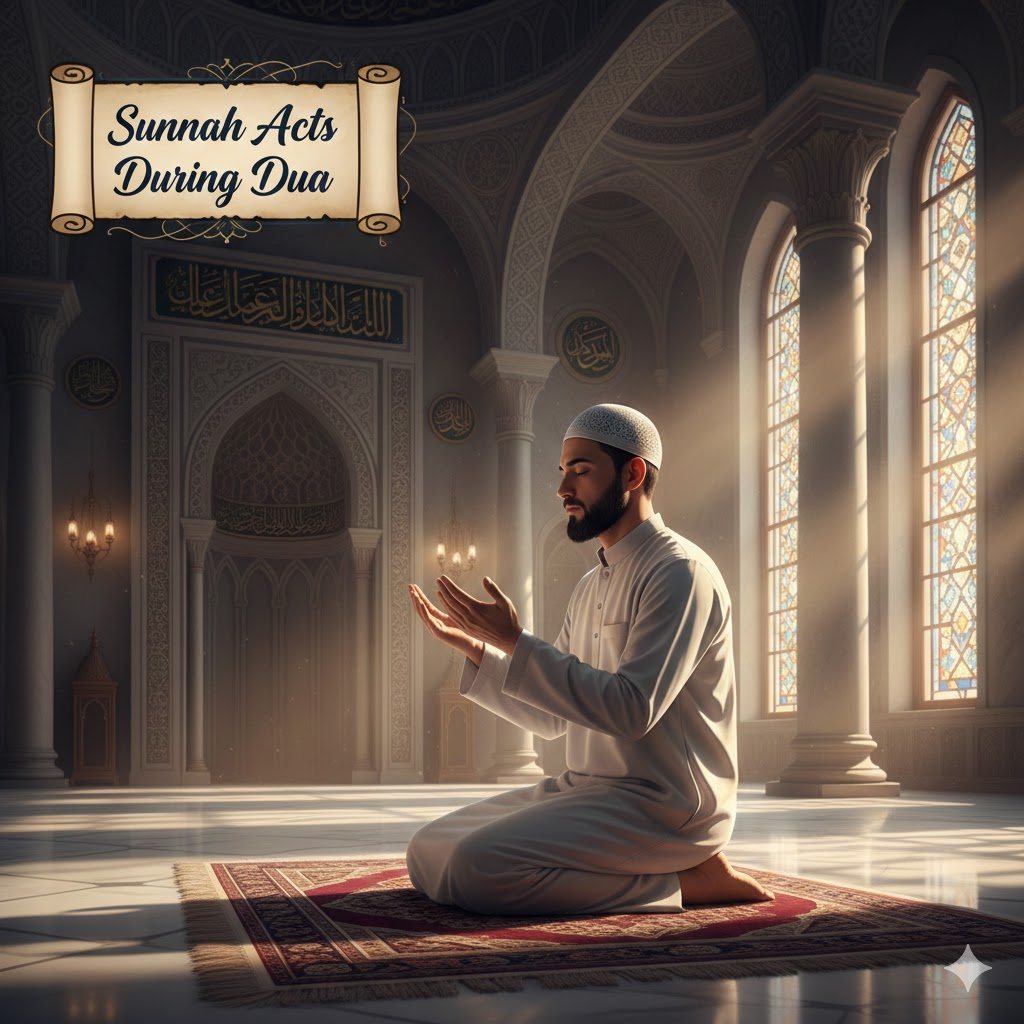
Raising the hands is a well-known Sunnah act during dua.
The Prophet ﷺ said:
“Indeed, Allah is shy and generous. He feels shy when His servant raises his hands to Him to return them empty.”
(Abu Dawood)
This act symbolizes humility, need, and submission before Allah.
Beginning Dua with Praise of Allah
Among the most important Sunnah acts during dua is starting with:
- Praise of Allah (Al-hamdu lillah)
- Sending salawat upon the Prophet Muhammad ﷺ
The Prophet ﷺ encouraged beginning dua with praise and blessings, as it increases acceptance.
Sending Salawat Upon the Prophet ﷺ
Sending blessings upon the Prophet ﷺ is a key Sunnah practice.
The Prophet ﷺ said that a dua remains suspended between heaven and earth until salawat is sent upon him (Tirmidhi).
This shows the spiritual importance of including salawat in every supplication.
Making Dua with Humility and Focus
Allah says in the Qur’an:
“Call upon your Lord humbly and privately.”
(Surah Al-A‘raf 7:55)
A Sunnah-based dua should be:
- Calm and focused
- Free from showing off
- Filled with sincerity
Dua should come from the heart, not just the tongue.
Asking with Firm Faith and Certainty
One of the Sunnah acts during dua is asking Allah with strong belief.
The Prophet ﷺ said:
“Call upon Allah with certainty that He will answer you.”
(Tirmidhi)
Doubt weakens dua, while certainty strengthens it.
Avoiding Hastiness in Dua
The Prophet ﷺ warned against impatience in dua.
He said that a person’s dua is accepted as long as they do not say:
“I made dua but it was not answered.” (Bukhari & Muslim)
Patience is a vital Sunnah characteristic during supplication.
Choosing the Best Times for Dua
Although dua can be made anytime, Sunnah highlights special times such as:
- Last third of the night
- Between adhan and iqamah
- During sujood
- On Friday
- While fasting
Making dua at these times follows the Sunnah and increases acceptance.
Ending Dua with Praise and Ameen
Just as dua begins with praise, it should also end with praise and Ameen.
Saying Ameen shows hope and trust that Allah will respond in the best way.
Common Mistakes That Go Against Sunnah
Some common mistakes include:
- Making dua without focus
- Rushing and being impatient
- Ignoring Sunnah etiquette
- Making dua only during hardship
Correcting these habits improves the quality of supplication.
Can Dua Be Accepted Without Sunnah Acts?
Yes. Allah accepts dua even if Sunnah acts are not followed. However, practicing Sunnah acts during dua:
- Beautifies worship
- Increases reward
- Strengthens faith
Sunnah is a path to excellence, not hardship.
Following Sunnah acts during dua transforms supplication into a powerful spiritual experience. From facing the Qiblah and raising hands to sending salawat and showing patience, each Sunnah act deepens sincerity and connection with Allah. By adopting these practices, Muslims can align their duas with the teachings of the Prophet Muhammad ﷺ and increase the chances of acceptance.
May Allah accept our duas and guide us to follow the Sunnah in all acts of worship. Ameen.