Introduction
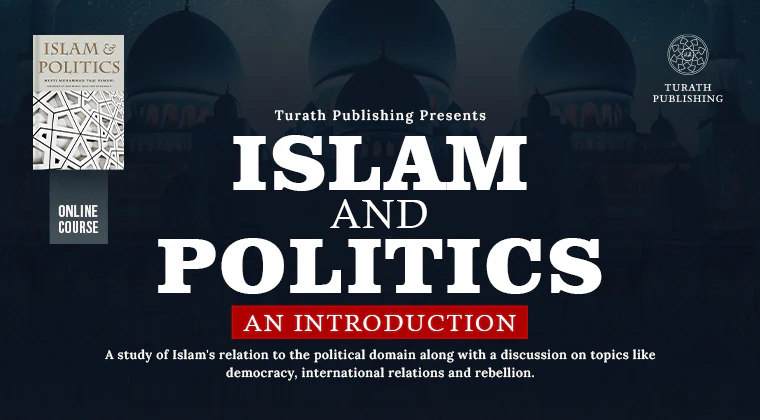
The relationship between Islam and politics has been a topic of discussion, debate, and sometimes misunderstanding for centuries. Islam is not only a religion concerned with spiritual beliefs and personal worship, but also a comprehensive way of life that provides guidance on social justice, governance, ethics, and community responsibility. Because of this holistic nature, politics and governance have always been connected to Islamic teachings in various forms.
In the modern world, the connection between Islam and politics is often portrayed in a simplified or controversial manner. Some view Islam as incompatible with modern political systems, while others argue that Islamic principles offer ethical foundations that can strengthen governance and social harmony. This article aims to explore the relationship between Islam and politics in a clear, balanced, and academic way, highlighting historical perspectives, core principles, modern interpretations, and contemporary challenges.
The Concept of Politics in Islam
Politics as Public Responsibility
In Islam, politics is not merely about gaining power or authority. It is closely linked to responsibility (amanah), justice (‘adl), and service to the people. Governance is viewed as a trust from Allah, and leaders are accountable not only to the people but also to God.
The Qur’an and the teachings of the Prophet Muhammad (peace be upon him) emphasize fairness, consultation, and moral conduct in public affairs. Political authority is not considered an absolute right but a duty that must be exercised with humility and integrity.
Moral Foundation of Governance
Islamic political thought is built on moral and ethical foundations. Unlike systems that separate ethics from politics, Islam integrates morality into leadership and decision-making. Corruption, oppression, and injustice are strongly condemned, regardless of who commits them.
This moral framework aims to ensure that political power is used for the welfare of society rather than personal or group interests.
Historical Background of Islam and Politics
Governance During the Prophet’s Time
The political dimension of Islam became visible during the Prophet Muhammad’s leadership in Madinah. The establishment of the Madinah Charter demonstrated principles of coexistence, justice, and shared responsibility among Muslims and non-Muslims.
This period shows that Islamic governance was not authoritarian but inclusive, based on consultation (shura) and mutual agreements.
The Era of the Rightly Guided Caliphs
After the Prophet’s passing, the early caliphate continued these principles. Leaders were chosen through consultation, and public accountability was encouraged. Citizens had the right to question leaders, and rulers were expected to live simple lives.
This era is often cited as an example of ethical governance rooted in Islamic values rather than political ambition.
Core Political Principles in Islam
Justice (‘Adl)
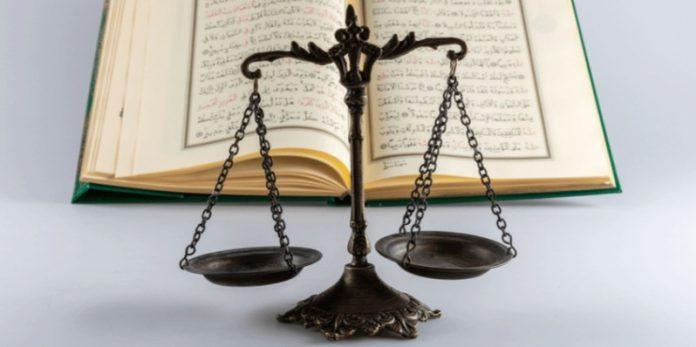
Justice is one of the central principles in Islamic political thought. The Qur’an repeatedly commands believers to stand firmly for justice, even if it goes against personal interests or powerful groups.
Islamic justice applies equally to rulers and citizens, rich and poor, Muslims and non-Muslims. No one is above the law.
Consultation (Shura)
Islam promotes consultation in decision-making. Leaders are encouraged to seek advice from knowledgeable and affected members of society before making important decisions.
Shura reflects participatory governance and discourages dictatorship or unilateral rule.
Equality and Human Dignity
Islam recognizes the inherent dignity of every human being. Political systems inspired by Islamic principles are expected to protect basic human rights, including life, property, honor, and freedom of belief.
This principle challenges discrimination and oppression in all forms.
Islam and Modern Political Systems
Compatibility with Democracy
One of the most debated topics is whether Islam is compatible with democracy. While Islam does not prescribe a specific political system, many scholars argue that democratic values such as accountability, consultation, and justice align closely with Islamic principles.
The key difference lies in moral boundaries, where Islamic teachings emphasize ethical limitations on political authority.
Nation-States and Islamic Identity
In the modern era, Muslims live within nation-states governed by constitutions and laws. This has led to diverse political models across Muslim-majority countries, ranging from secular systems to those influenced by Islamic law.
Islam allows flexibility as long as core ethical principles are upheld and public welfare is prioritized.
Political Islam: Meaning and Misinterpretations
Understanding Political Islam
Political Islam refers to movements that seek to apply Islamic principles to governance and public life. These movements vary widely in ideology, methods, and goals.
It is important to understand that political Islam is not a single, unified ideology but a broad spectrum of interpretations.
Media Representation and Stereotypes
Global media often associates political Islam with extremism, which creates fear and misunderstanding. In reality, the majority of Islamic political thought emphasizes peaceful reform, social justice, and ethical governance.
Reducing Islam’s political role to extremism ignores its rich intellectual and historical diversity.
Challenges Facing Islam and Politics Today
Extremism and Misuse of Religion
One of the biggest challenges is the misuse of Islamic symbols and language for political gain. Extremist groups distort religious teachings to justify violence and authoritarianism, contradicting core Islamic values.
This misuse harms both political stability and the image of Islam globally.
Corruption and Power Struggles
Many Muslim-majority societies struggle with corruption, lack of transparency, and political instability. These issues are not caused by Islam but by the failure to apply its ethical principles sincerely.
Islam strongly condemns corruption and exploitation of power.
The Role of Scholars and Citizens
Responsibility of Religious Scholars
Islamic scholars play a crucial role in guiding political thought. Their responsibility is to promote justice, peace, and ethical leadership rather than supporting unjust rulers.
Independent scholarship is essential to prevent the politicization of religion.
Civic Engagement of Citizens
Islam encourages active citizenship. Speaking against injustice, participating in community affairs, and holding leaders accountable are considered moral duties.
Political silence in the face of oppression is discouraged in Islamic teachings.
Islam, Politics, and Global Peace
Promoting Coexistence
Islamic political principles emphasize peaceful coexistence and respect for diversity. History shows that Islamic governance often protected religious minorities and promoted social harmony.
In today’s interconnected world, these values are more relevant than ever.
Dialogue Instead of Conflict
Constructive dialogue between Islamic political thought and global political systems can help reduce misunderstandings. Mutual respect and cooperation are essential for global peace.
Final Thoughts
The relationship between Islam and politics is complex, deeply rooted in history, and rich in ethical principles. Islam does not promote blind authority or unchecked power; instead, it emphasizes justice, accountability, consultation, and moral responsibility.
Understanding Islam’s political dimension requires moving beyond stereotypes and exploring its core values objectively. When applied sincerely, Islamic principles can contribute positively to governance, social justice, and peaceful coexistence in both Muslim and non-Muslim societies.
Rather than asking whether Islam belongs in politics, a more meaningful question is how ethical values inspired by faith can improve political systems and serve humanity as a whole.