Introduction
Salah, or prayer, is one of the most important pillars of Islam and holds a central place in the life of a Muslim. It is not only a religious obligation but also a powerful means of spiritual connection between a believer and Allah. Through Salah, Muslims express their submission, gratitude, and dependence on the Creator. Performing Salah regularly helps maintain faith, discipline, and inner peace in everyday life.
Salah as a Pillar of Islam
In Islam, Salah is the second pillar, coming immediately after the declaration of faith (Shahadah). This highlights its significance in a Muslim’s life. The Prophet Muhammad (peace be upon him) emphasized that Salah is the foundation of religion. Without establishing prayer, other acts of worship lose their strength. It is obligatory for every adult Muslim to perform five daily prayers, regardless of their situation, as long as they are physically and mentally capable.
A Direct Connection with Allah
One of the unique aspects of Salah is that it creates a direct and personal connection with Allah. There is no intermediary between the worshipper and the Creator. When a Muslim stands in prayer, recites verses from the Qur’an, and makes supplication, they are communicating directly with Allah. This connection strengthens faith and reminds believers that Allah is always near and aware of their struggles and intentions.
Spiritual and Mental Benefits of Salah
Salah provides immense spiritual and mental benefits. Regular prayer helps purify the heart from negative thoughts such as arrogance, greed, and anger. It also brings peace and calmness to the mind. In a world full of stress, anxiety, and distractions, Salah acts as a spiritual anchor. Allah mentions in the Qur’an that prayer prevents immorality and wrongdoing, guiding believers toward a righteous path.
Discipline and Time Management
Performing five daily prayers teaches discipline and effective time management. Each prayer has a fixed time, encouraging Muslims to organize their daily routines around worship. This habit builds punctuality, responsibility, and self-control. Over time, Salah shapes a balanced lifestyle where spiritual duties are given priority alongside worldly responsibilities.
Social Unity and Equality
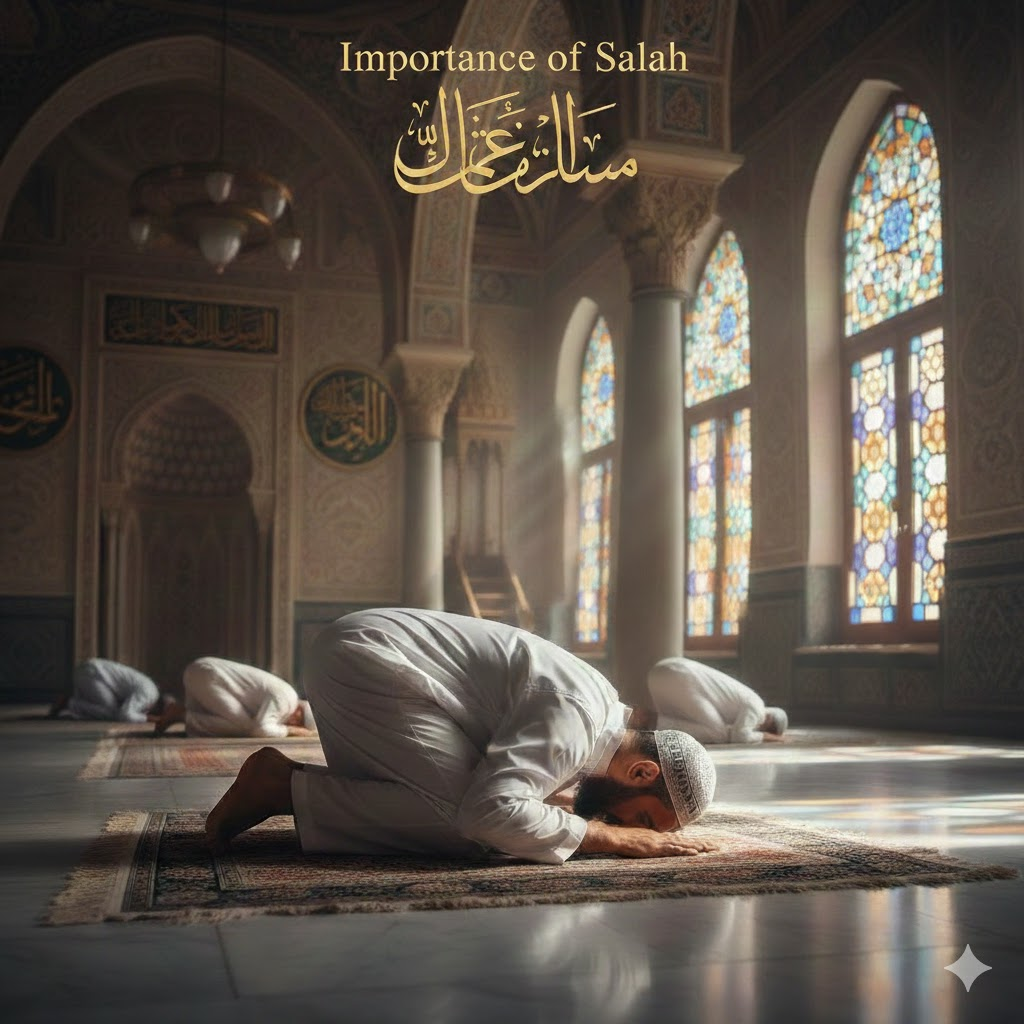
Congregational prayer, especially in mosques, promotes unity and equality among Muslims. When people stand shoulder to shoulder in prayer, differences of wealth, status, and nationality disappear. Everyone bows and prostrates before the same Lord. This strengthens brotherhood, mutual respect, and a sense of belonging within the Muslim community.
Salah constantly reminds believers of their purpose in life. Through Qur’anic recitation and supplication, Muslims seek guidance, forgiveness, and strength from Allah. In times of difficulty, prayer becomes a source of hope and patience. It encourages reliance on Allah and trust in His wisdom, even when circumstances seem challenging.
Consequences of Neglecting Salah
Neglecting Salah can have serious spiritual consequences. Islam teaches that prayer is the first deed to be questioned on the Day of Judgment. Ignoring Salah weakens faith and distances a person from Allah. Over time, this distance can lead to moral decline and spiritual emptiness. Therefore, maintaining regular prayer is essential for a healthy Islamic life.
Final Thoughts
Salah is far more than a ritual; it is a complete system of spiritual development, discipline, and moral guidance. It strengthens the bond between a Muslim and Allah, purifies the heart, and brings peace to the soul. By establishing Salah regularly and sincerely, Muslims can transform their lives and remain firm on the path of righteousness. In Islam, success in this world and the Hereafter begins with prayer.