Introduction
Dua (supplication) is one of the most profound acts of worship in Islam. It is a direct conversation between a believer and Allah, expressing dependence, hope, and humility. While Allah listens to every dua, following the correct Islamic dua method ensures that your supplication aligns with the Sunnah, enhancing focus, sincerity, and spiritual reward.
Making dua is not just about asking for needs; it is a form of worship (ibadah), a moment of connection with Allah, and a demonstration of total reliance on Him. By following the proper method, Muslims can make their supplications more meaningful and spiritually uplifting.
What Is Dua in Islam?
Dua is asking Allah for help, guidance, forgiveness, or blessings. The Prophet Muhammad ﷺ said:
“Dua is worship.” (Tirmidhi)
This means that dua is not a mere request; it is an act of obedience and devotion. Every dua is a reflection of a believer’s heart, trust in Allah, and recognition of His power.
Importance of Following the Correct Dua Method
Following the correct Islamic dua method:
- Increases sincerity and humility
- Follows the Sunnah of the Prophet ﷺ
- Strengthens spiritual focus
- Enhances chances of acceptance by Allah
- Shows respect and reverence in worship
Ignoring the proper method may reduce the spiritual connection, although Allah accepts all sincere duas. Following Sunnah practices makes the dua complete and blessed.
Step 1: Begin with Praise of Allah
Starting your dua with praise of Allah is an essential Sunnah practice. Examples:
- “Alhamdulillah” (All praise is due to Allah)
- “SubhanAllah” (Glory be to Allah)
Praise reminds us of Allah’s greatness and sets the tone of humility. This practice aligns the dua with proper etiquette and follows the Prophet ﷺ’s method.
Step 2: Send Salawat Upon the Prophet ﷺ
Before making requests, send blessings on the Prophet ﷺ. Example:
- “Allahumma salli ‘ala Muhammad”
The Prophet ﷺ said that dua is suspended between heaven and earth until salawat is sent upon him (Tirmidhi). Including this in your supplication increases spiritual reward and aligns with Sunnah etiquette.
Step 3: Face the Qiblah
Facing the Qiblah is recommended but not obligatory. It symbolizes unity, obedience, and focus. The Prophet ﷺ often faced the Qiblah during important supplications, such as during the Battle of Badr (Sahih Muslim).
Even though dua is accepted in any direction, facing the Qiblah improves concentration and spiritual presence.
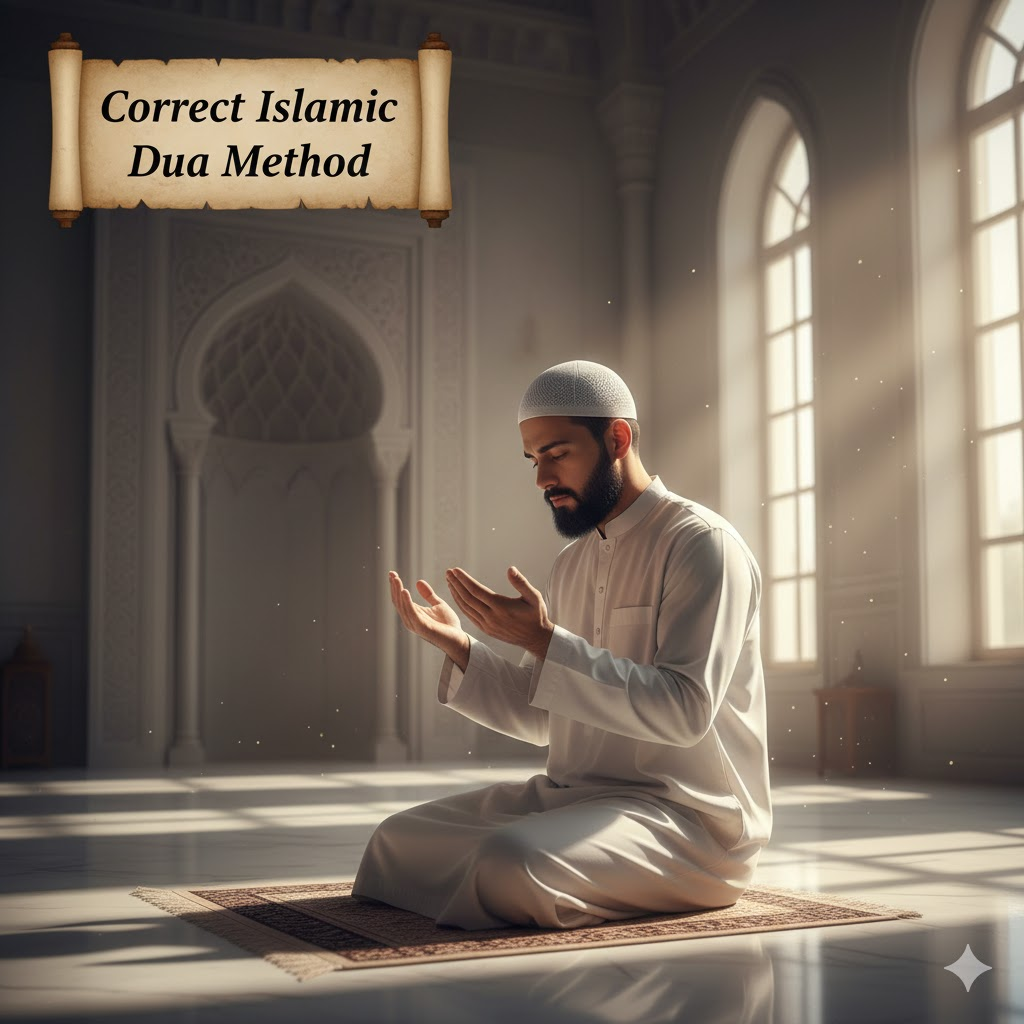
Step 4: Raise Your Hands
Raising the hands while making dua is a Sunnah act:
- Shows humility and neediness before Allah
- Symbolizes reliance on Allah’s mercy
- Demonstrates earnestness in the request
The Prophet ﷺ said:
“Allah feels shy when His servant raises his hands to Him without returning them empty.” (Abu Dawood)
Hands should be raised naturally, palms facing upward.
Step 5: Make Dua With Sincerity and Humility
The heart must be present in the supplication:
- Avoid distraction or showing off
- Speak to Allah with complete humility
- Focus on your needs while acknowledging His wisdom
Sincere dua reflects a believer’s devotion and increases the spiritual benefit of the act.
Step 6: Ask with Certainty
Always ask Allah with confidence that He will answer:
“Call upon Allah with certainty that He will answer you.” (Tirmidhi)
Faith strengthens the dua. Doubt or impatience can weaken the spiritual connection. Believers must trust Allah’s wisdom and timing.
Step 7: Avoid Hastiness
Patience is crucial. The Prophet ﷺ warned:
“A person’s dua will be answered as long as he does not say: ‘I made dua but it was not answered.’” (Bukhari & Muslim)
Dua may be answered immediately, later, or in a better form than expected. Trust in Allah’s plan is key.
Step 8: Choose the Best Times for Dua
Certain times are especially recommended in Sunnah:
- The last third of the night
- Between adhan and iqamah
- During sujood (prostration)
- On Fridays
- While fasting
Making dua during these times increases spiritual reward and aligns with Prophet’s ﷺ guidance.
Step 9: Make Dua for Yourself and Others
The Prophet ﷺ emphasized:
- Making dua for yourself and others
- Including family, friends, and the Ummah
- Using inclusive wording like “our needs”
This increases humility, compassion, and blessings.
Step 10: End With Praise and Ameen
Conclude your dua by:
- Praising Allah again
- Saying “Ameen”
This reflects trust in Allah’s wisdom and demonstrates complete reliance on His mercy.
Bonus: Common Mistakes to Avoid
- Making dua without concentration
- Being impatient
- Ignoring Sunnah etiquette
- Asking for things prohibited in Islam
Correcting these mistakes ensures your dua is properly aligned with Islamic teachings.
Final Thoughts
The correct Islamic dua method combines humility, sincerity, faith, and adherence to Sunnah practices. From praising Allah and sending salawat, to facing the Qiblah, raising hands, asking with certainty, and ending with Ameen, every step strengthens spiritual connection and increases the reward of supplication.
By following these steps, Muslims can ensure their dua is complete, spiritually fulfilling, and in accordance with the teachings of the Prophet Muhammad ﷺ.
May Allah accept our duas, guide us to follow Sunnah in all acts of worship, and grant us sincere hearts in supplication. Ameen.