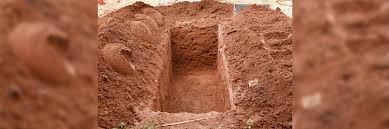
Talqeen—reminding the deceased of the Kalimah and essential beliefs after burial—is a well-established and spiritually uplifting practice in many Muslim societies. Classical scholars of Ahl-us-Sunnah have discussed it for centuries, and several authentic narrations describe its virtues.
This article presents a detailed, research-based explanation of talqeen, its evidences, benefits, method of performing it, and the opinions of great scholars.
What Is Talqeen After Burial?
Talqeen literally means to teach, remind, or make someone repeat something.
In Islamic burial rites, talqeen refers to:
Standing near the head side of the deceased after burial and reminding him of the testimony of faith, the oneness of Allah, the prophethood of Muhammad ﷺ, and other essential beliefs needed for the grave questioning.
This act is considered mustahab (recommended) according to many classical scholars, as it helps the deceased remain firm during the questioning of Munkar and Nakir, the two angels of the grave.
Evidence of Talqeen in Hadith
Several narrations mention talqeen, the most famous being the hadith reported by Imam Tabarani. In this narration, the Prophet ﷺ described exactly how talqeen should be done and its impact on the grave questioning.
The Hadith of Talqeen (Reported by Tabarani)
The Prophet ﷺ said:
“When one of your brothers passes away and you finish burying him and leveling the soil over his grave, let one of you stand at the head side of the grave and say:
‘O so-and-so, son of so-and-so!’
He (the deceased) hears him but you cannot hear him.”
The Prophet ﷺ then continues:
“Call him a second time, and he will sit upright.
Call him a third time, and he will say:
‘Guide me, may Allah have mercy on you.’
Though you (the living) do not hear it.”
Then the person performing talqeen should say:
“Remember the testimony with which you left this world:
There is no god but Allah,
Muhammad is His servant and His Messenger,
You are pleased with Allah as your Lord,
Islam as your religion,
Muhammad ﷺ as your Prophet,
And the Qur’an as your guide.”
The Prophet ﷺ then said:
“At that moment, Munkar and Nakir will hold each other’s hands and say:
‘Let us return. Why question one who has already been taught his proof?’
And they depart.”
A companion asked:
“What if the deceased’s mother’s name is unknown?”
The Prophet ﷺ replied:
“Then ascribe him to his mother Hawwa (Eve). Say:
‘O so-and-so, son of Hawwa.’”
(Reported by Tabarani in Al-Mu’jam al-Kabir)
Does the Deceased Really Hear?
Yes. Islamic texts confirm that the deceased hears certain things in the grave.
The Prophet ﷺ said:
“Indeed, he hears the sound of their sandals when they walk away.”
— Sahih al-Bukhari
Therefore, hearing the talqeen is not impossible. Many scholars affirmed that the soul remains connected to the body in the grave in a special way known only to Allah.
Scholarly Opinions Supporting Talqeen
Numerous major Sunni scholars approved and recommended the practice of talqeen. Among them:
1. Imam al-Suyuti (Sharh al-Sudoor)
He documented narrations, practices of the Salaf, and scholarly consensus showing talqeen is a beneficial act.
2. Imam Ibn Abidin (Radd al-Muhtar)
He clearly states that talqeen after burial is mustahab and practiced by righteous scholars for centuries.
3. Imam Tashkani (Mu’jam al-Kabir)
He records the hadith and supports its authenticity and permissibility.
4. Scholars of the Hanafi, Shafi’i, and Hanbali Schools
Many jurists from these madhhabs approved it as a recommended Sunnah-based practice, not an innovation.
5. Bahar-e-Shariat
A famous Hanafi Fiqh book that mentions multiple accepted methods of performing talqeen.
Why Talqeen Is Beneficial for the Deceased
1. Helps Answer Munkar & Nakir’s Questions
Talqeen strengthens the deceased and helps him remain steadfast in the grave.
2. Provides Spiritual Comfort
The presence of believers reminding him of the Kalimah brings peace to the soul.
3. Follows the Practice of the Pious
Generations of scholars, sufis, and imams continued this tradition.
4. Based on Prophet’s Instruction
Since the Prophet ﷺ himself taught it, Muslims practice it out of love and obedience.
How to Perform Talqeen Correctly (Step-by-Step Guide)
Step 1: Complete the Burial
After placing the deceased in the grave and leveling the soil.
Step 2: Stand at the Head Side
The person performing talqeen should stand near the head side of the grave.
Step 3: Call the Name of the Deceased
Call him three times:
“O so-and-so, son of so-and-so!”
If mother’s name is unknown:
“O so-and-so, son of Hawwa!”
Step 4: Recite the Core Message
Then say slowly and clearly:
“Remember the faith upon which you left the world:
There is no god but Allah,
Muhammad ﷺ is His servant and Messenger.
Be firm upon believing in Allah as your Lord,
Islam as your religion,
Muhammad ﷺ as your Prophet,
and the Qur’an as your guide.”
Step 5: Make Dua for His Steadfastness
Ending the talqeen with dua:
“O Allah, make his questioning easy.
Grant him steadfastness with the firm word in this life and in the Hereafter.”
Is Talqeen Considered an Innovation?
Some groups today label talqeen as bid’ah (innovation).
However, the overwhelming evidence disproves this claim:
- It is based on a Prophetic narration.
- Many classical scholars endorsed it.
- It has been practiced for more than 1400 years.
- It does not contradict any principle of Shariah.
Therefore, labeling it an innovation is incorrect. At minimum, it is a permissible and beneficial act, and at best, a mustahab Sunnah-based practice.
Different Accepted Methods of Talqeen
Fiqh books mention several forms of talqeen:
- The method from the Tabarani hadith
- Shorter versions focusing only on the Kalimah
- Methods with additional duas for steadfastness
Bahar-e-Shariat and classical Hanafi commentaries state:
Any of the approved methods are valid and acceptable.
Final Thoughts
Talqeen is a spiritually powerful and historically rooted practice in Islam. With clear narrations from the Prophet ﷺ, strong support from classical scholars, and centuries of continuous practice, talqeen remains a recommended Sunnah act that benefits the deceased during the most challenging moments of the grave.
Performing talqeen after burial is not only a sign of love for the deceased but also an act of obedience to the prophetic tradition.
Muslims are encouraged to revive this practice with sincerity, care, and respect.