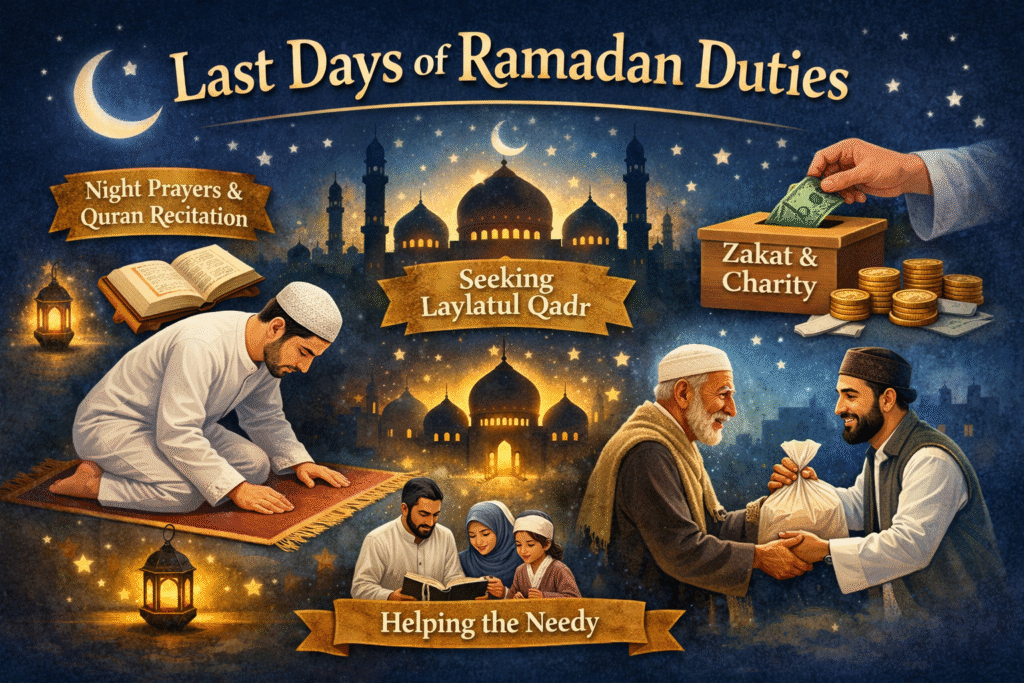
Introduction: The Importance of the Final Days of Ramadan
The last days of Ramadan hold a special place in Islam. As the blessed month approaches its end, Muslims are reminded to increase their devotion, reflect on their spiritual progress, and seek the mercy of Allah with greater sincerity. The final ten days are considered the most valuable period of Ramadan because they contain the night of immense blessings known as Laylatul Qadr.
During these days, believers are encouraged to strengthen their faith, engage in extra acts of worship, and purify their hearts. The Prophet Muhammad used to increase his efforts in worship during the last ten nights more than at any other time. This teaches Muslims that the ending of Ramadan is not a time to slow down in worship, but rather a time to intensify devotion and gratitude to Allah.
Increasing Worship and Devotion
One of the most important responsibilities in the last days of Ramadan is to increase acts of worship. Muslims should dedicate more time to prayer, supplication, and remembrance of Allah.
Performing additional prayers such as Tahajjud during the night is highly recommended. These quiet moments of worship allow believers to connect deeply with Allah and seek forgiveness for their sins.
Reciting the Qur’an is also a powerful way to spend these blessed nights. The Qur’an was revealed during Ramadan, which makes its recitation especially meaningful during this time.
Muslims are encouraged to reflect on the meanings of the verses, not only recite them. By understanding the message of the Qur’an, believers can improve their character and strengthen their relationship with Allah.
Seeking Laylatul Qadr
The greatest blessing of the final days of Ramadan is the opportunity to witness Laylatul Qadr, also known as the Night of Decree.
According to the Qur’an, this night is better than a thousand months of worship. This means that sincere acts of worship performed on this night bring rewards greater than more than eighty years of devotion.
Muslims are encouraged to search for Laylatul Qadr during the odd nights of the last ten days of Ramadan. These nights include the 21st, 23rd, 25th, 27th, and 29th nights.
During these nights, believers should engage in prayer, make heartfelt dua, and ask Allah for forgiveness and guidance. A famous supplication recommended by the Prophet Muhammad is:
“O Allah, You are Most Forgiving, and You love forgiveness, so forgive me.”
This simple but powerful dua reminds Muslims to seek Allah’s mercy and purification of the soul.
Practicing I’tikaf
Another important act during the last days of Ramadan is I’tikaf. This is a spiritual retreat where a Muslim stays in the mosque for several days to dedicate themselves entirely to worship.
During I’tikaf, believers minimize worldly distractions and focus only on prayer, Qur’an recitation, and remembrance of Allah. This practice helps strengthen faith and encourages deep reflection.
The Prophet Muhammad regularly observed I’tikaf during the last ten days of Ramadan. By following this tradition, Muslims can gain spiritual clarity and strengthen their connection with Allah.
Even if someone cannot stay in the mosque for the full period, they can still spend extra time in worship at home or in the mosque during the night.
Giving Charity and Helping the Needy
Generosity is another important responsibility during the final days of Ramadan. Islam strongly encourages helping those in need and sharing blessings with others.
One important form of charity during this time is Zakat al-Fitr. This charity must be given before the Eid prayer so that poor and needy people can also celebrate Eid al-Fitr with happiness.
Zakat al-Fitr purifies the fasting person from any mistakes made during Ramadan and helps provide food for those who cannot afford it.
In addition to Zakat al-Fitr, Muslims are encouraged to give voluntary charity (Sadaqah). Helping others, feeding the poor, and supporting charitable causes bring great rewards during these blessed days.
Strengthening Family and Community Bonds
Ramadan is not only about individual worship but also about strengthening relationships within families and communities.
During the last days of Ramadan, Muslims should try to create a peaceful and spiritual environment in their homes. Families can pray together, read the Qur’an together, and encourage each other to perform good deeds.
Sharing meals, helping neighbors, and supporting community members in need are also important acts of kindness. These actions reflect the true spirit of Islam, which emphasizes compassion and unity among believers.
Reflecting on Personal Growth
As Ramadan comes to an end, Muslims should reflect on their spiritual journey throughout the month.
Questions to consider include:
- Have I improved my prayers?
- Did I control my anger and negative habits?
- Did I become more patient and compassionate?
Reflection helps believers evaluate their progress and identify areas where they can continue to improve even after Ramadan ends.
The goal of Ramadan is not just temporary worship but long-term transformation of the heart and character.
Preparing for Life After Ramadan
Another responsibility during the last days of Ramadan is preparing to maintain good habits after the month ends.
Many people become more disciplined during Ramadan by praying regularly, reading the Qur’an, and avoiding sinful behavior. The challenge is to continue these habits throughout the year.
Muslims should set realistic goals for maintaining their spiritual growth. For example, they may decide to continue reading the Qur’an daily, performing voluntary prayers, or giving regular charity.
By maintaining these good practices, the lessons learned during Ramadan can continue to benefit a believer long after the month has ended.
Final Thoughts: Finishing Ramadan with Faith and Gratitude
The last days of Ramadan are a precious opportunity for Muslims to seek Allah’s mercy, forgiveness, and blessings. These days remind believers to increase their worship, search for Laylatul Qadr, give charity, and reflect on their spiritual journey.
By fulfilling these responsibilities, Muslims can complete Ramadan with sincerity and gratitude. The end of Ramadan is not the end of devotion but the beginning of a renewed commitment to faith and righteous living.
Every believer should strive to leave Ramadan with a purified heart, stronger faith, and a sincere intention to continue worshipping Allah throughout the rest of the year.EFFECTIVE RAMADAN.