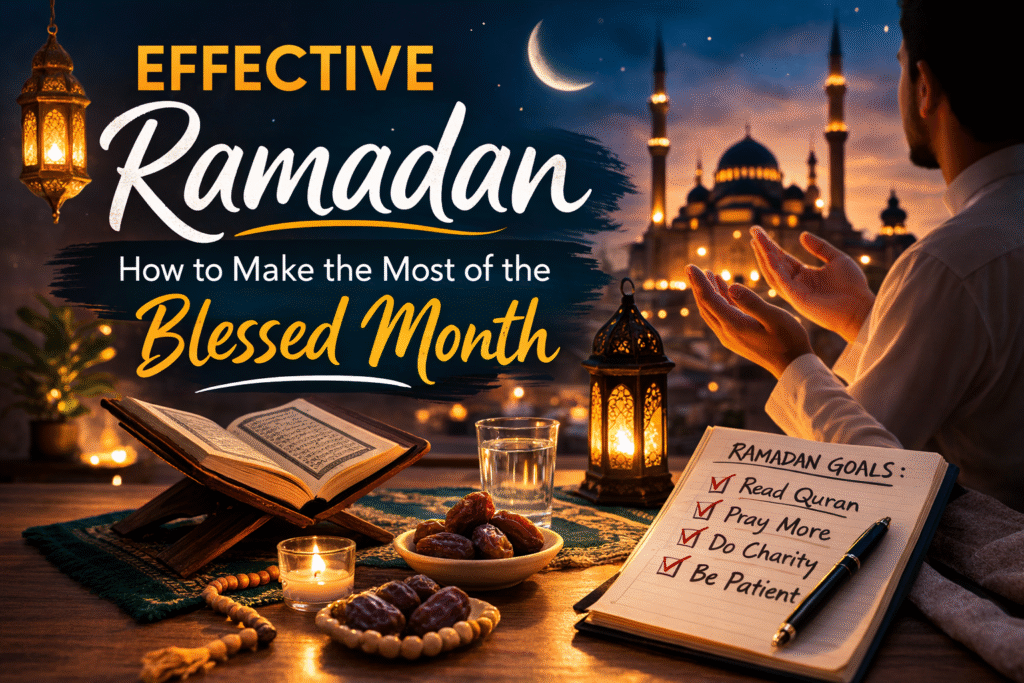
Introduction to an Effective Ramadan
Ramadan is the most sacred month in Islam, a time when Muslims around the world focus on worship, self-discipline, and spiritual growth. However, many people spend Ramadan only fasting during the day without fully using its spiritual opportunities. An effective Ramadan means using every moment of this blessed month to strengthen our relationship with Allah, improve our character, and increase our good deeds.
This month is a unique opportunity for believers to transform their lives. By planning our time, increasing acts of worship, and avoiding distractions, we can make Ramadan truly meaningful. Every Muslim should try to make this Ramadan more productive than the previous ones.
Understanding the Purpose of Ramadan
The main purpose of Ramadan is to develop Taqwa, which means being conscious of Allah in every action. Fasting is not only about staying away from food and drink but also about controlling our thoughts, words, and behavior.
When Muslims fast sincerely, they learn patience, humility, and gratitude. Hunger reminds us of the struggles of the poor and encourages us to become more compassionate. Ramadan also teaches discipline because Muslims follow a strict schedule of fasting, prayer, and reflection.
Therefore, an effective Ramadan begins with understanding its real purpose: becoming a better Muslim and strengthening our connection with Allah.
Starting Ramadan with a Clear Intention
Every good action in Islam begins with intention. Before Ramadan starts, Muslims should make a sincere intention to improve their faith and maximize their worship.
Setting personal spiritual goals can make Ramadan more effective. For example, one may decide to complete the Quran at least once, pray Taraweeh regularly, or increase charity. These goals help keep us focused throughout the month.
A clear intention also reminds us that Ramadan is not only a cultural tradition but a powerful spiritual journey.
Building a Daily Ramadan Routine
Having a well-planned routine helps Muslims stay productive during Ramadan. Without planning, people often waste valuable time sleeping or using social media.
A good Ramadan routine usually begins with Suhoor, the pre-dawn meal, followed by Fajr prayer. After Fajr, spending some time reading the Quran or making dua can bring peace to the heart.
During the day, Muslims should continue their normal responsibilities such as work or study while maintaining patience and good behavior. In the evening, Iftar should be followed by Maghrib prayer, Taraweeh, and Quran recitation.
Creating a balanced routine ensures that every part of the day includes remembrance of Allah.
Increasing Quran Recitation
Ramadan is known as the month of the Quran because the Quran was first revealed during this blessed time. For this reason, Muslims try to recite and reflect on the Quran more frequently.
Reading even a few pages daily can help complete the entire Quran during the month. More importantly, understanding the meaning of the verses can strengthen faith and guidance.
Listening to Quran recitation, reading translations, and reflecting on the messages can make the experience deeper and more meaningful.
Performing Extra Prayers
One of the most special acts of worship in Ramadan is Taraweeh prayer, which is performed after the night prayer. These extra prayers allow Muslims to stand before Allah and seek His mercy and forgiveness.
Many people find spiritual peace while praying Taraweeh in the mosque with their community. However, those who cannot go to the mosque can also pray at home.
In addition to Taraweeh, performing Tahajjud in the last part of the night is highly rewarding. These voluntary prayers bring believers closer to Allah and increase the blessings of Ramadan.
Practicing Charity and Helping Others
Ramadan is also a time of generosity. Muslims are encouraged to give charity, feed the poor, and support those in need.
Many people pay their Zakat during Ramadan because the rewards are multiplied in this blessed month. Even small acts of kindness, such as sharing food for Iftar or helping someone in difficulty, can bring great rewards.
Helping others not only benefits the community but also purifies the heart and increases gratitude.
Avoiding Distractions and Bad Habits
To have an effective Ramadan, Muslims must try to avoid distractions that waste time or reduce spiritual focus. Excessive use of social media, unnecessary entertainment, or idle talk can take away valuable moments of worship.
Ramadan is also an excellent time to break bad habits such as anger, gossip, or laziness. Fasting trains the soul to control desires and behave with patience and kindness.
By reducing distractions, believers can focus more on prayer, Quran, and remembrance of Allah.
Seeking the Blessings of Laylatul Qadr
One of the greatest opportunities in Ramadan is Laylatul Qadr, also known as the Night of Power. This night is described in the Quran as being better than a thousand months.
Muslims search for this night during the last ten nights of Ramadan. On these nights, believers increase their prayers, recite the Quran, and make sincere supplications.
Spending these nights in worship can bring immense rewards and forgiveness from Allah.
Strengthening Family and Community Bonds
Ramadan also strengthens relationships among families and communities. Sharing Suhoor and Iftar with loved ones creates a sense of unity and gratitude.
Mosques become centers of spiritual activity where people pray together and support one another. Community charity programs and group prayers help build stronger social connections.
By spending time with family and helping the community, Ramadan becomes a time of both spiritual and social growth.
Continuing the Good Habits After Ramadan
The true success of Ramadan is not only about worship during the month but also about maintaining those good habits afterward.
Muslims should try to continue praying regularly, reading the Quran, and performing acts of kindness even after Ramadan ends. This helps preserve the spiritual progress made during the month.
Ramadan should serve as a training period that strengthens faith for the rest of the year.
Final Thoughts
An effective Ramadan is one in which Muslims use their time wisely to grow spiritually and improve their character. By understanding the purpose of fasting, creating a daily routine, increasing worship, helping others, and avoiding distractions, believers can truly benefit from this blessed month.
Ramadan is a rare opportunity that comes only once a year. Those who use it properly can gain immense rewards, forgiveness, and closeness to Allah. May every Muslim experience a productive and spiritually fulfilling Ramadan.If you wanted to know more about shab e qadr .read this article.SHAB E QADR.