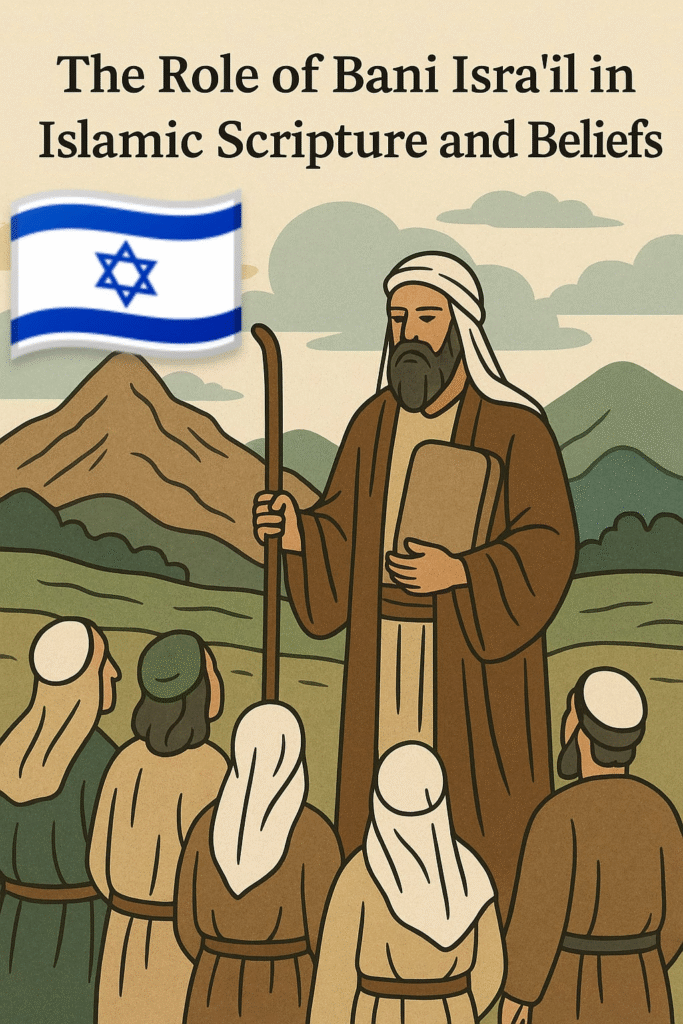
Introduction
The Qur’an mentions the story of Bani Isra’il repeatedly—not to promote hatred or blame a nation, but to present powerful lessons for humanity. Their history reflects how divine blessings, when met with ingratitude and disobedience, can lead to moral and spiritual decline. Through their story, Allah teaches later generations how faith, patience, and obedience are essential to maintaining divine favor.
Deliverance from Pharaoh: A Great Divine Favor
Bani Isra’il were once a severely oppressed people under the tyranny of Pharaoh. Allah, in His mercy, sent Prophet Musa (peace be upon him) to rescue them from slavery and injustice. By Allah’s command, the sea was parted, allowing them to escape safely, while Pharaoh and his army were destroyed. This event stands as a clear sign of Allah’s power and His support for the oppressed.
The Test of Faith After Freedom
Soon after their liberation, Bani Isra’il encountered a community that worshipped idols. Shockingly, they asked Musa (peace be upon him) to make an idol for them as well. This request revealed a weakness in their faith—although they had witnessed Allah’s miracles, traces of ignorance and disbelief still lingered in their hearts. Musa (peace be upon him) strongly rejected their demand and warned them against such misguidance.
The Trial of Samiri and the Golden Calf
When Musa (peace be upon him) went to Mount Sinai for forty days to receive divine commandments, Bani Isra’il grew impatient. Taking advantage of this moment, a man named Samiri misled them into worshipping a golden calf. This act of shirk was a grave violation of Allah’s covenant and a clear example of how quickly a community can deviate when patience and guidance are abandoned.
From Chosen to Accountable: Losing Divine Honor
The Qur’an acknowledges that Bani Isra’il were once granted a special status due to the guidance and prophets sent among them. However, this honor was conditional. Repeated disobedience, arrogance, distortion of divine teachings, and ingratitude caused them to lose that distinction. Allah’s favor is not permanent for any nation—it depends on righteousness, obedience, and sincerity.
Power as a Test, Not a Guarantee
One of the most important lessons from the story of Bani Isra’il is that power and freedom are tests, not rewards in themselves. Many people turn to Allah during oppression, but once authority and comfort are achieved, they forget their purpose. The Qur’an uses past nations as reminders that success without faith leads to destruction.
Lessons for the Muslim Ummah Today
The Qur’anic narrative of Bani Isra’il is a warning for Muslims of every generation. Establishing faith is not about slogans, groups, or personalities—it is about sincerity to Allah. If believers lose their moral compass, justify wrongdoing in the name of strategy, or prioritize worldly success over divine guidance, they risk repeating the same historical mistakes.
Muslims are reminded to focus on pleasing Allah rather than people, to remain cautious of misleading influences, and to ensure that methods used in the name of religion do not contradict its core principles.
Final Thoughts
The story of Bani Isra’il is a mirror for all believers. It teaches that divine blessings require gratitude, obedience, and patience to be preserved. The Qur’an does not narrate history without purpose; it offers guidance for those who reflect. If Muslims hold firmly to faith, ethics, and accountability before Allah, they can avoid the failures that led previous communities astray.